Indigotin is water-insoluble until reduced in an alkaline bath (pH 10.4 to 11.2) into soluble leuco-indigo; brief 15-second rope-dyeing dips followed by 60-second air skying oxidize 8 to 14 outer pigment rings while preserving an undyed white cellulose core.
1. Alkaline Reduction & Air Oxidation
Whether derived from composted Polygonum tinctorium leaves (Japanese sukumo) or synthesized pure indigotin, indigo pigment does not dissolve directly in neutral water. Vat masters introduce a reducing agent in an alkaline medium: traditional wood-ash lye (aku), slaked lime, and wheat bran feed thermophilic bacteria inside sukumo vats, while industrial rope-dyeing ranges use sodium hydrosulfite and caustic soda.
As warp ropes emerge from the liquor, cotton fibers appear pale chartreuse-green. Atmospheric oxygen rapidly reverses the reduction reaction across overhead skying rollers, locking insoluble blue indigotin molecules mechanically within the outer cellulose cuticle.
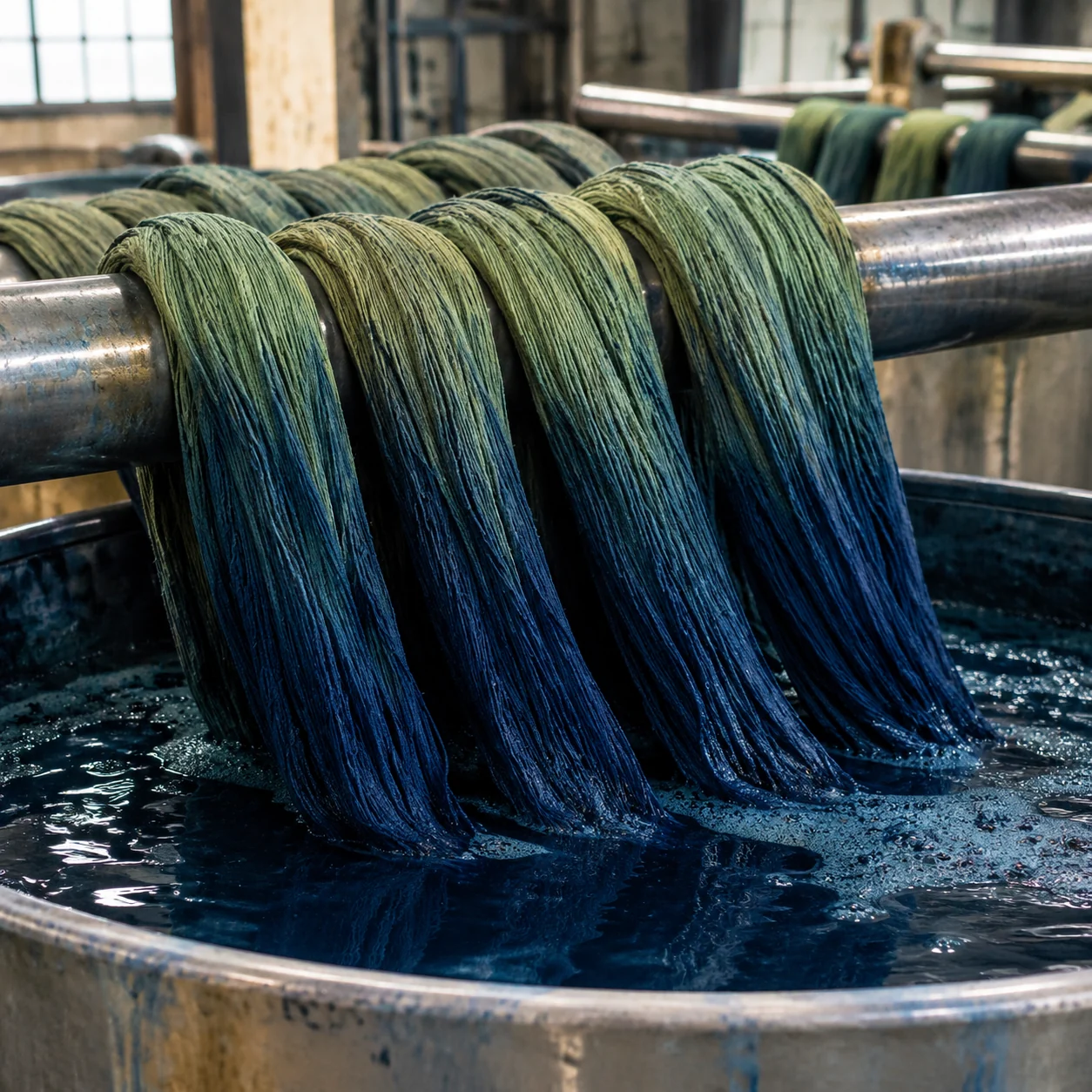
2. Rope Dyeing vs Hank Vat Parameters
| Dyeing Method | Bath Alkalinity (pH) | Dip Count | Core Penetration | Fade Signature |
|---|---|---|---|---|
| Industrial Rope Dyeing | 10.8 - 11.4 | 8 - 14 short dips | Outer 15% - 25% ring | High-contrast whiskers & honeycombs |
| Fermented Sukumo Hank | 10.2 - 10.8 | 18 - 30 hand dips | 70% - 95% deep saturation | Gradual slate-to-cerulean patina |
| Slasher Sheet Dyeing | 11.0 - 11.6 | 4 - 8 continuous dips | Outer 10% - 18% ring | Fast mid-blue surface abrasion |
3. White-Core Ring-Dyeing Mechanics
Because each rope-dyeing immersion lasts only 12 to 20 seconds before air oxidation seals the outer cuticle, pigment never saturates the center of tightly twisted #6 ring-spun yarns. Over months of mechanical abrasion at pocket edges, knees, and belt loops, outer indigo layers flake away cleanly to expose the bright white cotton core underneath.
4. Low-Water Finishing & Los Angeles Dyeing Context
Conventional garment laundries historically consumed up to 70 liters of water per pair of finished jeans during enzyme stonewashing and potassium permanganate rinsing. In April 2016, Los Angeles technical denim panels covered by California Apparel News and Sourcing Journal brought together Rivi Goods owner George Wilson alongside Patagonia creative leadership to examine ozone, laser, and raw unwashed finishing workflows that eliminate multi-bath laundry discharge.